


Imagine how strange this business model would be. A customer drives a new car off the lot of a car dealership without paying for it. They drive the car around for one year. At the end of the year, they decide how much they will pay for the car, if they pay for it at all. This is the business model of equity research, kind of.
This business model is under attack from three directions (regulation, economics, and AI). It may not survive in its current form.
Defining the players
The sell-side includes banks and brokerages like Goldman, Morgan Stanley, and Jefferies. They provide research, trading, and deal services to investors. A sell-side equity research analyst covers about 15 to 25 stocks in one sector. They publish opinions on these stocks. Their clients are the buy-side money managers.
The buy-side includes institutions that manage money and buy securities, like stocks. These are hedge funds, mutual funds, and pensions. Buy-side analysts and portfolio managers decide what to buy with their funds’ money.
The revenue streams
The broker vote
Pricing is bespoke and negotiated per client. The institutional investors set aside a discretionary budget for research each year. At the end of the year, they do a broker vote. Their investment teams vote on which sell-side research analysts provided the most value. Then they dole out dollars accordingly.
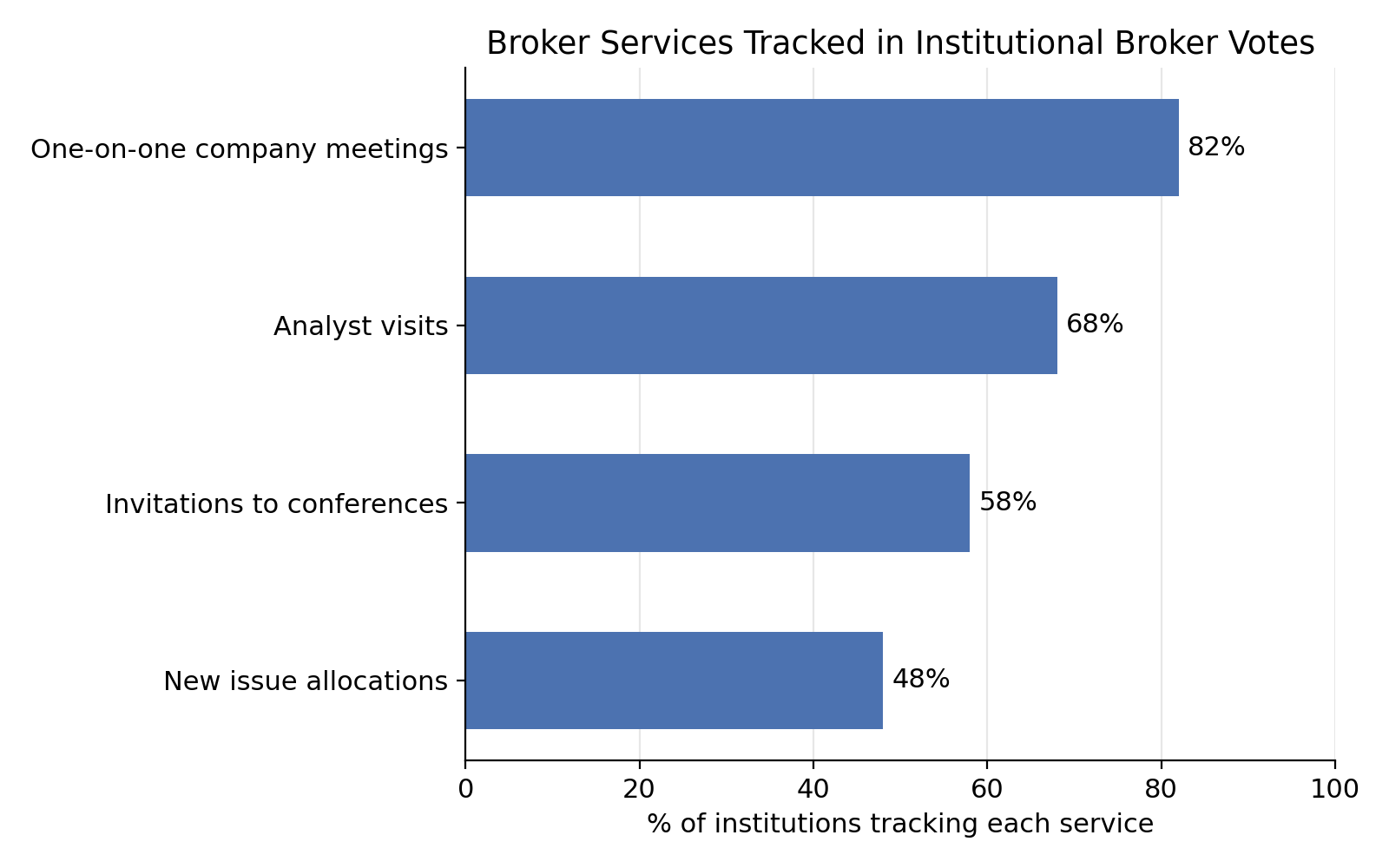
Corporate access is the single biggest monetization lever. It often drives the outcome of the broker vote more than any written research reports. Corporate access means meeting with a company’s management team. Sell-side analysts help make these connections. It includes conferences, non-deal roadshows, and 1:1s with CEOs. Consider the incentive this creates for sell-side analysts. Their compensation rides on whether the CEOs of the companies they cover like them. Not very unbiased, I’d say.
Investment banking transactions (indirect)
In 2002 and 2003, lawmakers passed regulations after the dot-com scandals. These rules separated investment bank transactions from the pay of research analysts. The investment banking team can still influence which analysts are most valuable to the firm. They base this on the deal pipeline. Bankers want to pitch private companies on having the best analyst in their industry.
Trading commissions
Trading commissions have largely collapsed as a profit stream. Most trades are now done electronically. They cost much less than the fees high-touch trading desks used to charge. The rise of passive capital has also resulted in less active trading and less research consumed. The trading commission pool still exists, but at a fraction of its former size.
Regulation tried to unbundle the business model
Regulators ran the experiment of forcing this business model to change. In 2018, Europe’s MiFID II rules made investors pay for research separately from trading. This resulted in research budgets shrinking, analyst headcount falling, and coverage of smaller companies vanished. It went badly enough that regulators began walking back the regulations. Now, European firms can bundle research and trading payments once again. The lesson learned is that when clients are forced to put an explicit price on sell-side research, they decide it isn’t worth much.
What the buy side wants to pay for
Buy-side investment teams dismiss sell-side analysts’ price targets and ratings (buy/hold/sell). Any half-decent buy-side firm runs its own analysis and has its own thesis. They are, however, willing to pay for sell-side research that offers proprietary insights.
This research might use satellite images of a retailer’s parking lot. It could also include credit card transaction data and interviews with customers and suppliers. As a sell-side research analyst, I called STD clinics to assess volume trends for various competitors, had blood drawn at three different labs in just one day, and read the serial number off the back of a new sequencer in a genomics lab.
AI is commoditizing research
The proprietary boots-on-the-ground research that once gave an edge is now being leveled out. Buy-side firms are increasing their spend on alternative data and using genAI to analyze it efficiently. Citadel and BlackRock have added genAI tools to their platforms. Large funds are creating their own systems. They are using private LLMs and training them on licensed data sets.
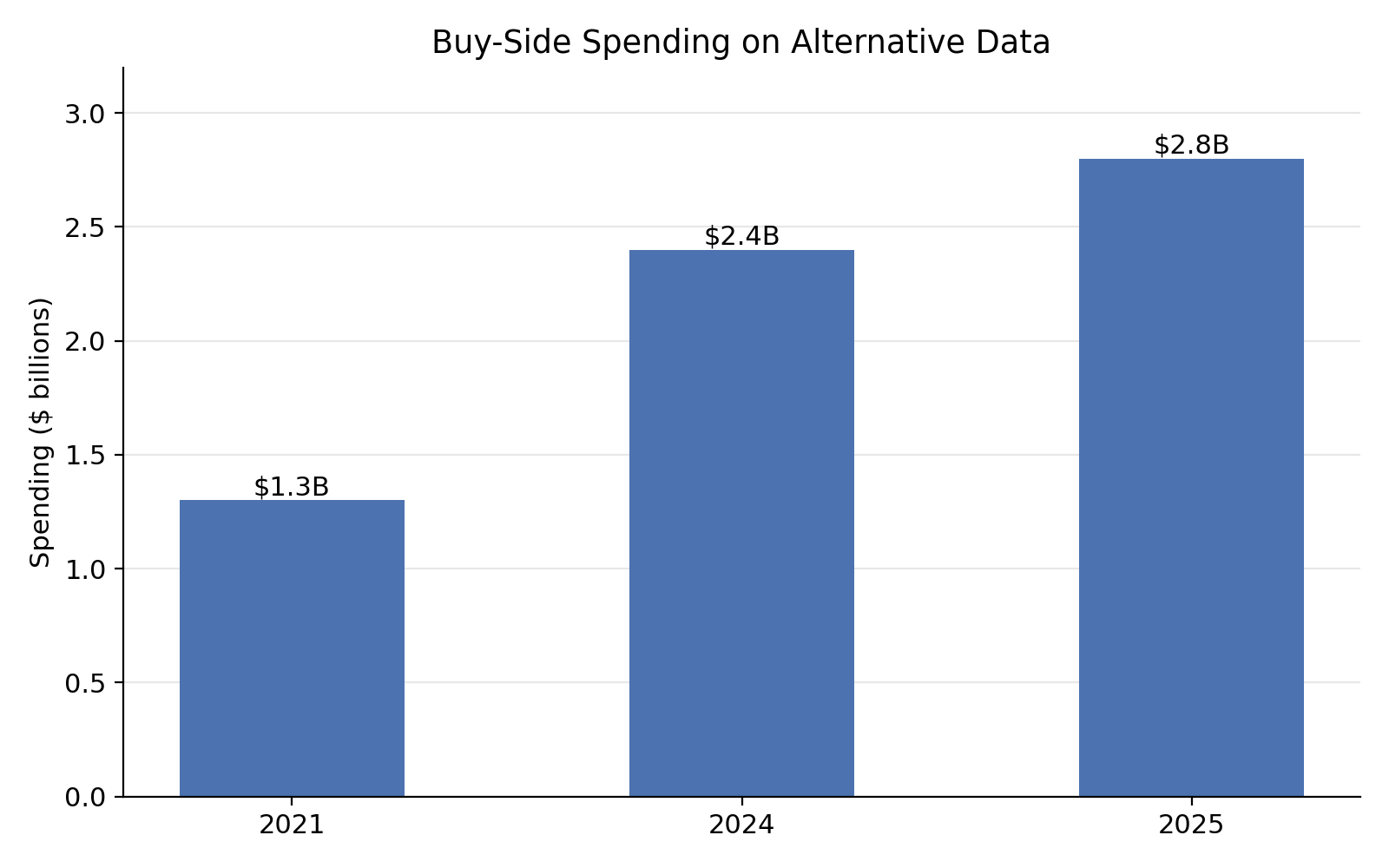
The buy-side is doing its own research in a more sophisticated way than before, using AI agents at little marginal cost. The market has commoditized the last differentiated product of sell-side research. This leaves only corporate access as their final moat. Equity research becomes little more than a relationship broker.
What this means for the individual investors
An individual investor can use AI to replace a junior investment analyst. AI can read and summarize a 10-K quickly and for minimal cost. This provides no edge to institutional investors who have access to the same AI tools. When everyone has AI, AI is not an edge but table stakes.
Proprietary research and alternative data often influence stock prices quickly. This happens before individual investors have a chance to act. AI doesn’t equalize access to information. Institutions still have better access to data.
But individual investors have edges that institutions can’t replicate, and AI amplifies them. An individual investor can own small-cap stocks too illiquid for a billion-dollar fund to touch. They can hold through a drawdown with no career risk and no quarterly benchmark to answer to. And now, with AI, one person can do the processing work of a junior analyst on companies too small for Wall Street to cover at all. AI plus small caps plus patience is a real strategy.